The History of the Official World Cup Match Balls
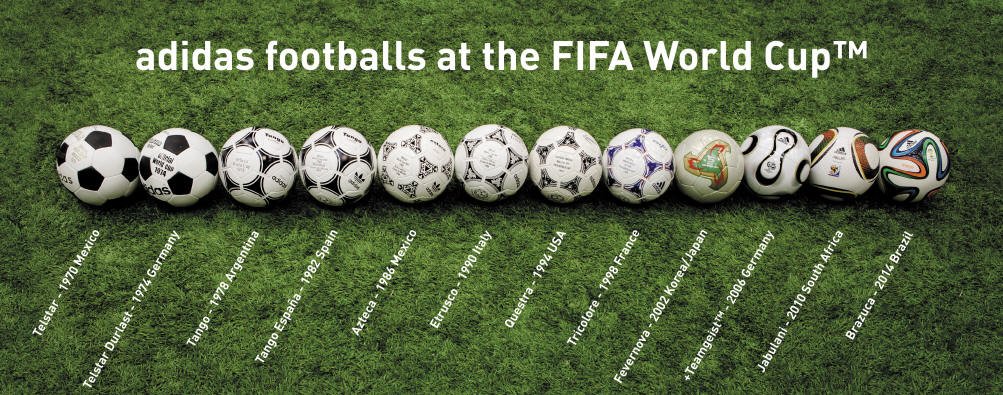
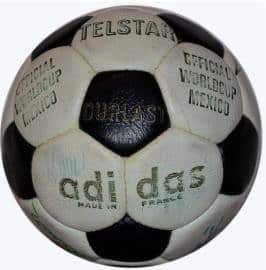
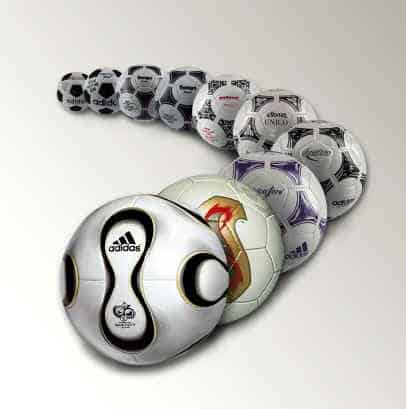
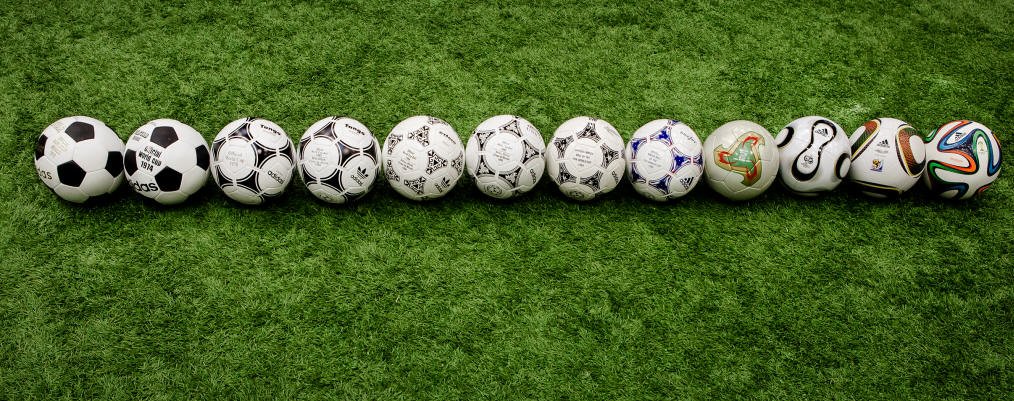
Telstar : Mexico, 1970 Adidas started to make soccer balls in 1963 but made the first official FIFA World Cup ball in 1970. This is the first ball used in the World Cup to use the Buckminster type of design. Also, the first ball with 32 black and white panels. The TELSTAR was more visible on black and white televisions (1970 FIFA World Cup Mexico™ was the first to be broadcast live on television).
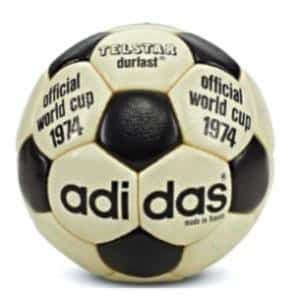
Telstar Durlast R : West Germany, 1974
Two match balls were used in 1974 – adidas Telstar was updated with new black branding replacing the gold branding and a new all-white version of Telstar named adidas Chile was introduced. 1974 was also the first time World Cup match balls could carry names and logos.
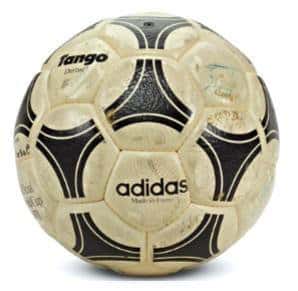
Tango Durlast: Argentina, 1978 The ball design represented elegance, dynamism and passion.
The 1978 match ball included 20 panels with triads that created an optical impression of 12 identical circles. The Tango inspired the match ball design for the following five World Cup tournaments.
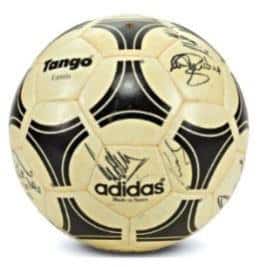
Tango Espana: Spain, 1982
Adidas introduced a new ball which had rubber inlaid over the seams to prevent water from seeping through. The first ball with water-resistant qualities. General wear from kicking however meant the rubber began to wear after a short time and needed to be replaced during the game. The last genuine leather world cup ball.
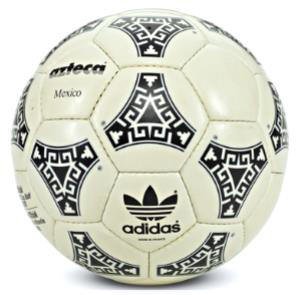
Azteca : México, 1986
The FIFA World Cup Mexico, saw the introduction of the first polyurethane coated ball which was rain-resistant. The first synthetic match ball, with good qualities on hard and wet surfaces.
The ball was the first to include designs inspired by the host nation. The Azteca was elegantly decorated with designs inspired by Mexico’s Aztec architecture and murals.
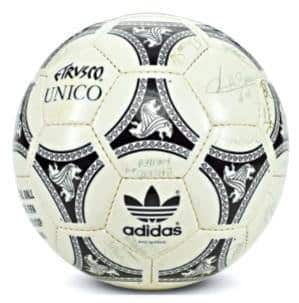
Etrusco: Italy, 1990
The first ball with an internal layer of black polyurethane foam. The name and design paid homage to Italy’s history and the fine art of the Etruscans.
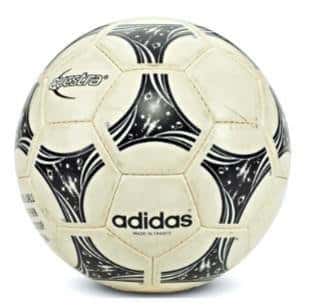
Questra: USA, 1994
FIFA World Cup USA, 1994, official ball which was enveloped in a layer of polystyrene foam.
This not only made it more waterproof but allowed the ball greater acceleration when kicked. The new game ball felt softer to the touch. Improved ball control and higher velocity during play.
The ball’s design represents space technology, high velocity rockets and America’s “quest for the stars.”
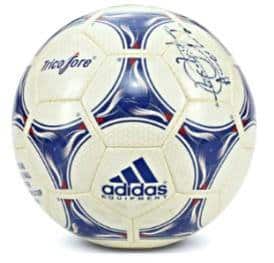
Tricolore: France, 1998
By 1998, FIFA World Cup France was played with a ball which sported the French red-white-blue tri-color. A complete departure from the old traditional black and white pattern. The first official World Cup colored soccer ball. The TRICOLORE used underglass print technology with a thin layer of syntactic foam.
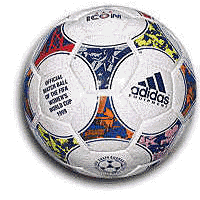
ICON Women’s World Cup 1999 Match Ball
The first ball specially designed for the Women’s World Cup
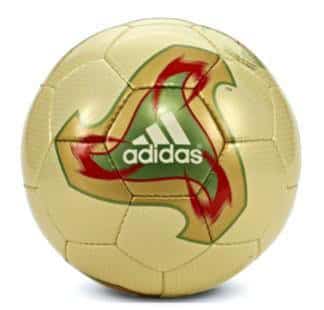
Fevernova TM : Korea Japan, 2002
For FIFA World Cup Korea Japan, 2002, Adidas created a new ball made up of thicker inner layers to increase the accuracy of the ball in flight. Fevernova included a refined syntactic foam layer that allowed for more precise and predictable flight path. Asian culture inspired the revolutionary colorful look.
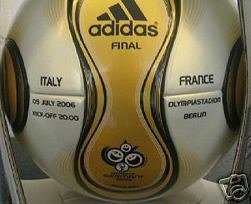
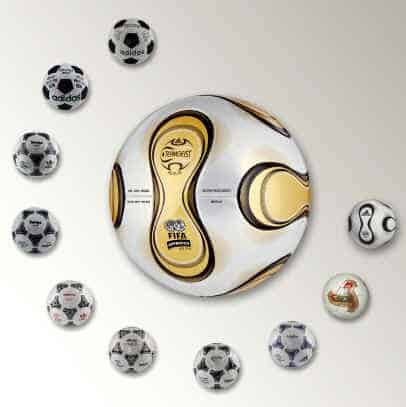
Teamgeist Germany, Berlin and Final Ball 2006
A radically new configuration reduced the amount of panel touch points forming a smooth and perfectly round exterior that improved accuracy and control. Prior to the Teamgeist, the surface of World Cup match balls had notable differences depending on where a player would strike the ball due to seams, ridges and other imperfections where panels come together. The revolutionary propeller design of the Teamgeist minimized corners and created a smoother surface for improved play. The ball was designed with traditional colors of the German flag and was accentuated with the golden color of the World Cup trophy.
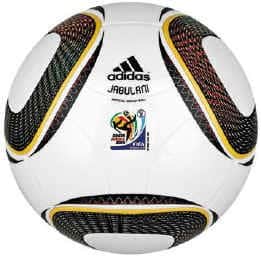
Jabulani – the Official Match Ball for the 2010 FIFA World Cup South Africa.
The Jabulani featured a new grip n groove technology that provided players a ball with stable flight and grip under all conditions. With eight thermally bonded 3-D panels that were spherically molded for the first time, the Jabulani was more round and accurate than its predecessors.
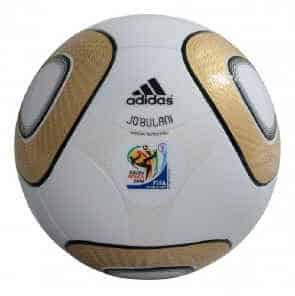
Jo’bulani – the Gold Final Official Match Ball for the 2010 FIFA World Cup South Africa.
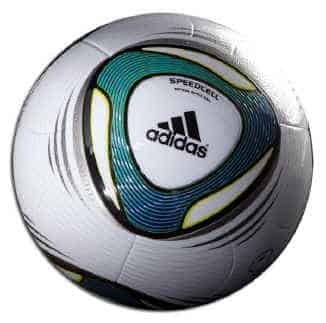
2011 Women’s World Cup Official Match Ball – SpeedCell
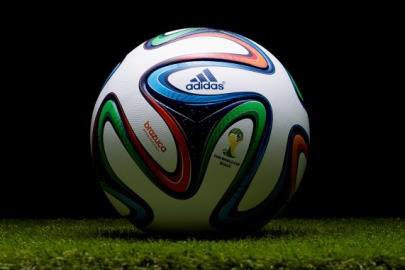
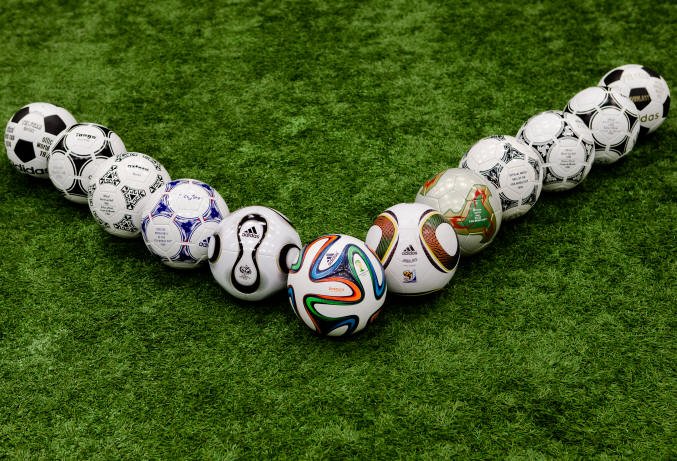
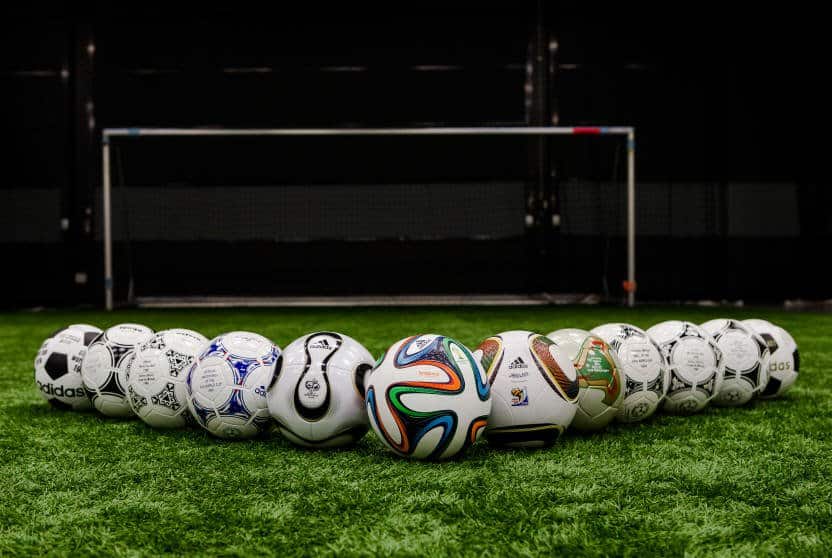
2014 FIFA World Cup Brazil Adidas Brazuca
Brazuca was confirmed as the match ball name after a public vote in Brazil, participated in by more than one million soccer fans in the host country.
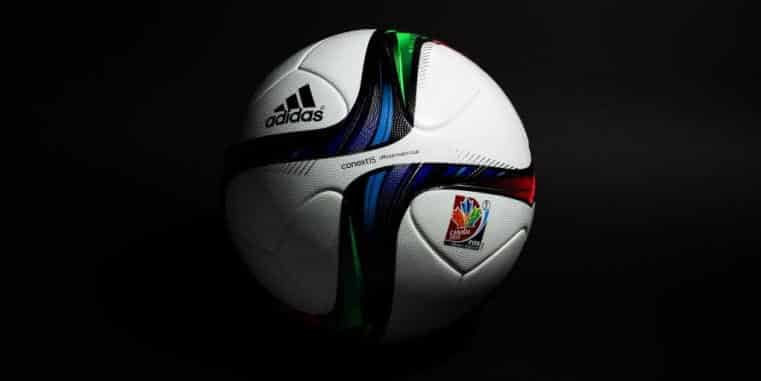
Women’s World Cup 2015 Match Ball
For FIFA Women’s World Cup Canada, 2015 conext15
“Telstar 18”, the Official Match Ball for the 2018 FIFA World Cup Russia
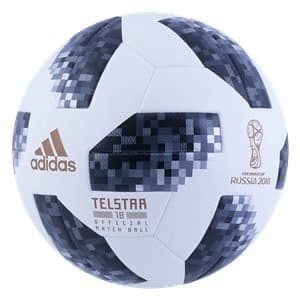
The new Telstar 18 is a reimagining of the first Adidas FIFA World Cup match ball – ‘star of television’
brazuca, 2014 FIFA World Cup Balls Video